it's persona
Tempo and Tempo Shifting in Video Games
i've been meaning to write more. the trouble with making video games is that, often, you can go long long stretches without having much to show off or talk about. i'm a little vain and i love to talk, so it's hard to go so long in silence... plus, i want to get faster at things. so here we go - i'm going to try and see what i can write in less than an hour. If i remember right, this was sakurai's approach to writing his Famitsu column... the clock is ticking, so let's get to it.
nothing here is law. it's just a loose attempt to explain how I think about games and game design. my ideas here don't, can't, and shouldn't be applied to every kind of game out there, but maybe it'll be useful to you anyway.
Pacing is Important
Today I want to talk about the concept of tempo in video games.
I think most people understand the idea of "pacing". There's a popular chart that goes around showing the pacing curve of movies like Star Wars, explaning how the movie goes through peaks and valleys of excitement, and how these peaks grow higher and higher as the movie goes on. Pretty obvious, right? You can't always be at maximum excitement - letting things slow down helps provide a necessary relaxing moment, and the dichotomy makes the exciting parts resonate more strongly.
Game design, too, obviously has this idea of pacing. Games start off slowly and simply, teaching you the rules and allowing you to take your time with straightforward challenges, easy enemies, warmup puzzles. As the game goes on, there are more rules, more mechanics, more complex enemies, and peaks of excitement with things like boss fights. For many games, the ideal is a game that grows more complex and deep over its runtime, with peaks & valleys of excitement, capping off with a high-intensity, high-excitement final boss, and ending with the denouement of the ending cutscene and credits.
cute dragon warrior 3 crows
Tempo is Moment-to-Moment
Pacing refers to the rising & falling of tension throughout the whole of a work, from the start to the end.
And tempo is... well, at least, the way I use it... Tempo is the shifting of the player's comfort level and "control" on a small scale, repeating over and over as someone plays the game. It's related to pacing because it has to do with tension and excitement, but it's not quite the same.
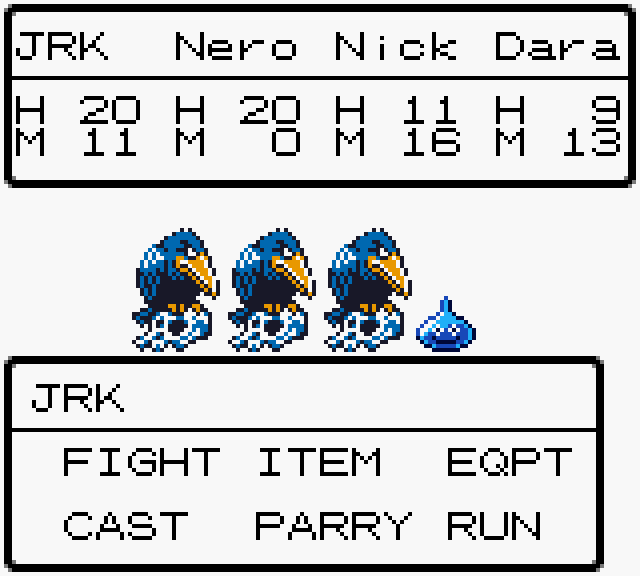
To explain the basic idea of tempo, take a turn-based RPG battle. Three goblins appear. You have three party members. Both sides get to attack three times, and you focus on a single goblin, and then another. Now the enemy party has one goblin, and you still have three party members. How much tension remains? How much excitement?
That's tempo in a nutshell. It's the shifting of the player's control, from "high control" to "low control", or maybe from "low stress" to "high stress", or vice-versa.
Traditionally, a lot of RPGs have battles that start off the player at a disadvantage. Over the course of the battle, the player gets more and more of an advantage, because you eliminate the ability of the enemies to act. The back half of an RPG battle might feel simple or even boring, because the last remaining enemy doesn't really pose a threat. This isn't to knock on RPGs! There is still a flow of tempo here - the "advantage" shifts from the enemies (the game) to the player.
Plus, over time, turn-based RPGs have added more and more complex and interesting mechanics to keep the tempo shifting over the course of a battle. An enemy that summons new enemies can shift a battle from feeling "comfy" to feeling stressful. Bosses that change phases also shift tempo... right when you get confident enough to deal massive damage to the boss, it changes to a new, more threatening phase, and you have more to worry about.
Tempo Shifting is the Key
Some other ways to think of tempo:
- Leading vs. following
- Being proactive vs. reactive
- Advantage vs. disadvantage
- Is the player confident or stressed?
- Who has the most control over the situation and outcomes - the player or the game?
Importantly, high or low tempo itself is not important. The trick is that tempo should always be shifting. The player's control should flow from low, to mid, to low, to high, to low, to high... and ideally, it should be a little unpredictable.
These tempo shifts are at the micro-level. We're measuring in minutes or seconds here, not hours. Tempo may shift:
- Every couple of minutes (a crucial teamfight in a MOBA)
- Every 30 seconds (a turn in an RPG)
- Every 5 seconds (a boss's windup in an action game)
- Less than 1 second (a single action in a fighting game)
Letting a player feel triumphant and confident is important! But if they stay there too long, they'll get bored, so find a way to knock them down a peg. If a player is on the backfoot forever, it can also feel frustrating in a boring way, and might not give them a lot to look forward to.
Finally... Tempo is often an emotional feeling as much as an actual, tangible element. Players rarely have perfect information, so they may not know just how much threat they're under. But if they feel like they lack control, or if they feel like they have control, the effect is the same. Honestly, a great way to shift tempo is to let a player feel comfortable and confident for a moment, only to have the game wake them up with a nasty surprise.
free hits
Many Examples of Tempo
How a game utilizes tempo will differ based on its goals, of course. So let's consider some different genres and mechanics!
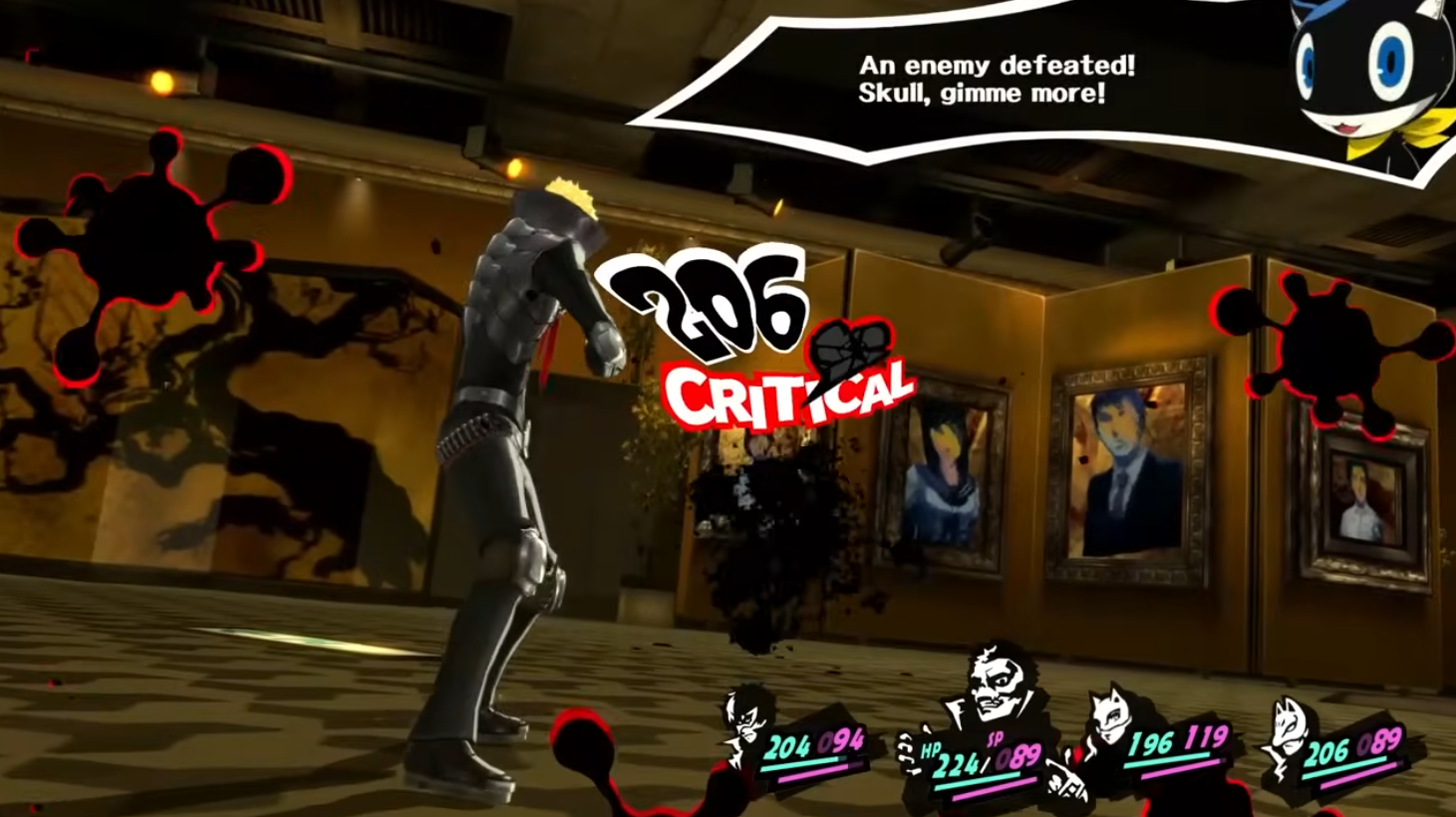
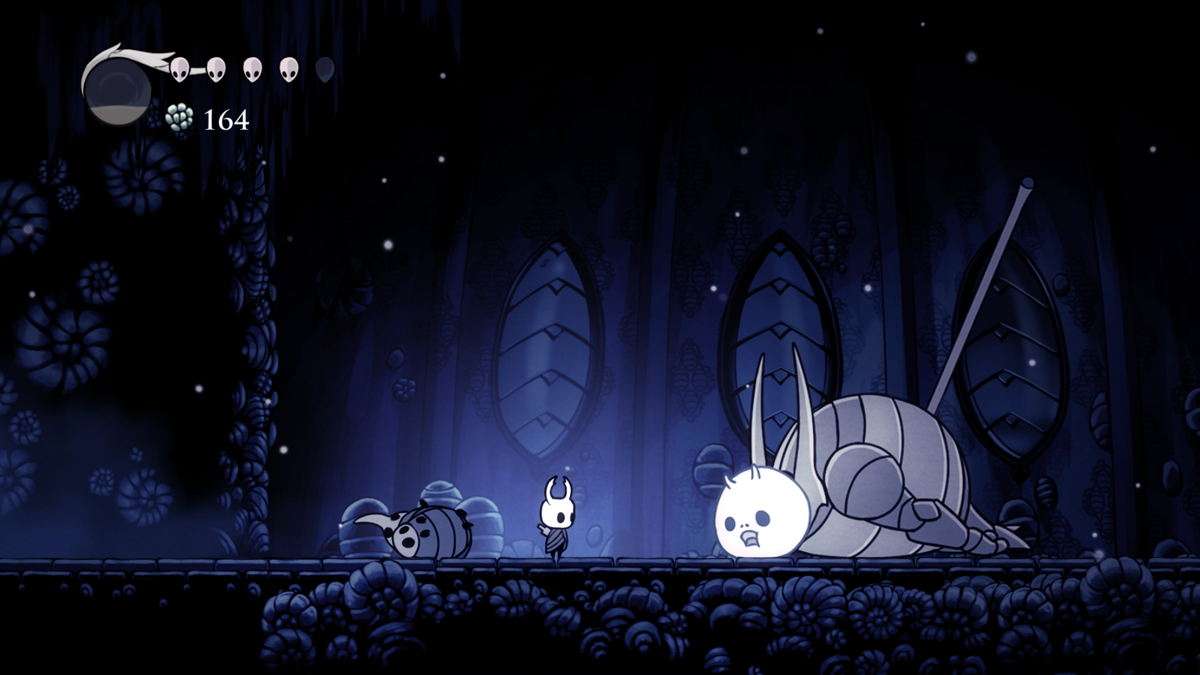
"Break" and "Stagger" systems are a really clear example of tempo shifting. This is when you hit a boss enough (or in the right way) that it falls to its knees stunned. You get a chance to rest & recover, or deal some free bonus damage. If the boss was particularly threatening, a stagger can feel like a chance to finally breathe and prepare for another round.
(I'd guess that the feeling of tempo shifting is a big part of why staggers are so prevelant in games nowadays - Elden Ring, Hollow Knight, Persona, Octopath Traveler, any modern Final Fantasy, Guild Wars 2...)
Limit Breaks, Super Meters, and other similar resources are another clear tempo mechanic. Getting to build up a bar over time gives you a clear goal even when you're on the backfoot, and unleashing a super attack can often swing the control of battle over to your side (see Bossgame ~)
Knockdown & rescue systems in co-op games are another example of tempo shifting. Whether it's Nightreign or PEAK, losing a character often means losing resources, losing actions, and making your goals a lot harder to reach. It's a massive loss of control, and it immediately shifts your goals to "go rescue your friend!" which is often a pretty risky task. Of course, if you do pull off the rescue, the feeling of tempo shifts back in your favor.
In a survival game, tempo is usually dictated by divvying out resources and save points. When the player finds a cache of ammo, they can play more proactively, taking out enemies with confidence because they have access to strong weapons. When they have more health, or they're near a safe place like a save point, they can act similarly confident, knowing they're far less likely to be taken out or to lose too much progress.
In many action games, tempo shifts can be created easily through enemy placement. A shmup can place some small "filler" enemies that are easily destroyed, to give the player a little relief between waves of bigger enemies & bullet curtains.
Any game with a dungeon can easily create a shift in tempo by including a room with a puzzle and no enemies. Without the time & resource pressure of enemies around, the tempo shifts entirely to the player's control... a small cutscene or risk-free "traversal" room serves the same purpose, so long as the player isn't at any risk. That said, these can outright kill the tension of the story & pacing if the player spends too long there, so it's a balance...
i won this round btw
Tempo in Multiplayer Games
Multiplayer online games are an interesting case, because tempo doesn't shift between game & player, but between player & player. Tempo is more difficult to balance in these kinds of games, because whenever one team feels confident, the other team is feeling nervous. Whether one side has an advantage or not is in the hands of the players, not the game, and so it's your game's core design that needs to naturally create tempo shifts.
MOBAs have some very good and bad examples of tempo shifting. Landing an important kill during a teamfight gives one team a huge advantage in control for a 30-90 seconds, causing a big swing in the feel of the game. It's an exciting moment and usually both teams will get a chance to experience it multiple times throughout the match.
On the other hand, many MOBAs have an economy system that leads to "snowballing" - that is, one team getting an advantage makes it easier to keep an advantage - and that means that over the course of a 40-minute game, one team may have clear control for 20 minutes or more, meaning the tempo is extremely stagnant for a long time! Which is usually extremely boring for both sides, especially the losing side, who starts to feel like they're too helpless to play.
This is the trouble with multiplayer games - how do you keep things interesting for both sides, without the winning side feeling like they're being punished for taking the lead? Not a solved question, obviously. Sometimes all you need is a shorter match length, so even the losing side doesn't get stuck losing for too long.
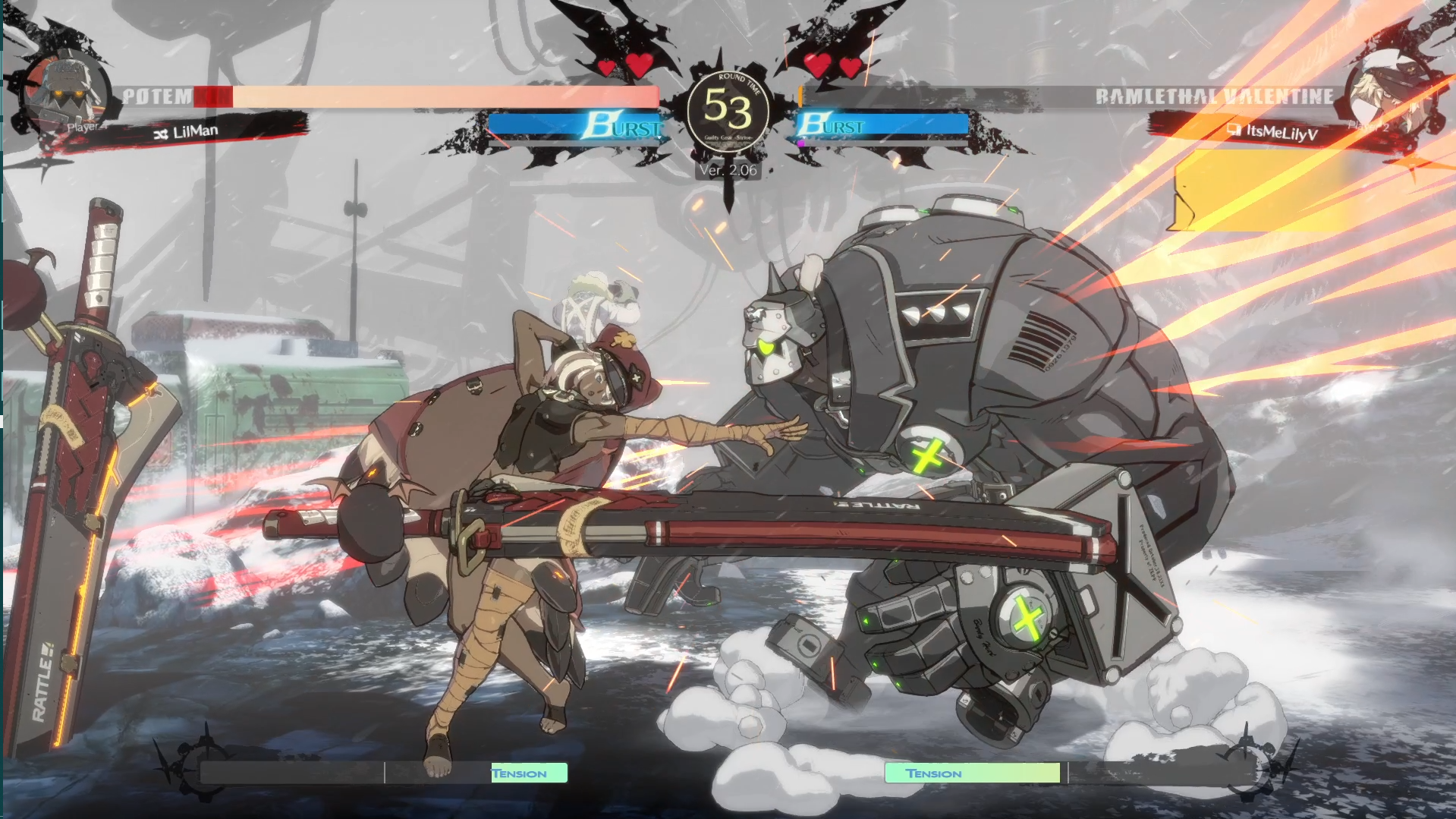
Fighting games are a great example of tempo shifting constantly. Most rounds of a fighting game will involve one player attacking while the other defends. If the attacker connects, they gain complete control of the tempo until the combo ends, and then things shift back towards neutral.
However, if the defender blocks or reverses correctly, it can take a fraction of a second for them to become the attacker. And the new defender can reverse just as quickly. There are, of course, matches that become one-sided due if the attacker can maintain advantage and snowball their resources. Even then, a huge appeal of fighting games is that a losing player can turn things around in the blink of an eye... and even if they can't, matches are so short that everyone gets a fresh start in a matter of minutes (setting personal confidence aside...)
Even as a spectator, the best fighting game matches to watch are the ones where the tempo is constantly shifting. One player takes control, the other pulls off a clever read or trick to steal control, and this shift back and forth, the unpredictability, is tense and fun!
This flowing and changing is what makes a game incredible to watch or play! I think fighting games are an incredible example of both the highs and lows of this... Nothing is better than a back-and-forth match, and nothing is worse than a one-sided blowout.
Some Games Don't Need To Worry About Tempo, Obviously
Some games just aren't about tension or adrenaline, or they focus on more traditional narrative pacing. Cozy scenery games like Unpacking don't need constant tempo shifts. Neither do a lot of detective games, like Obra Dinn, or visual novels like Umineko.
Tempo is just a concept, it's a tool you can use when you need it. If you're desigining a challenging game where the player is struggling for some kind of control of a dangerous or hectic situation, tempo is worth keeping in mind. Design your game to create tempo shifts, and you can keep things from getting too boring.
That's it for today. I'm writing about this for my own sake, really... one day it struck me just how many games nowadays let your stagger bosses. Honestly, it might even be over-used... there's plenty of games that don't use much tempo-shifting and still feel very satisfying. Like, I don't know if you could argue La-Mulana has a particularly strong sense of tempo shifting, since you're always on the backfoot...
In any case, it's just another way of looking at things. If you disagree with me, I understand! Please discuss in the comments below.
see you later!
Lily 💜